

Rule Book
Your steel. Her imagination.
Everything you need before your first duel.
You do all the fighting. VESPER listens, suggests and forges. The game’s own rules check everything she makes. This page covers how to speak to her, what happens after you do, how a duel is fought, and the modes in this playtest.
A hollow diamond marks a rule the next build may change. This page will be checked again when it lands.
Speaking to VESPER
VESPER does not fight. She forges what you imagine; landing it is yours.
How to talk
- Talk to VESPER
- tap V · speak · tap V
- Controller: click the right stick, R3.
She listens only between your two taps. One request can run for about 27 seconds; after that she stops listening by herself.
Speak English, Hindi, or Hinglish written in Roman letters. She understands all three, and mostly answers in English. Other languages are not supported yet.
Short, clear lines work best. Headphones are recommended, so she hears you and not the fight. While you speak, the game turns its own sound down.
The microphone is optional. The game asks for it once, at the title screen. Say no and everything still works with buttons; you can let her listen later from Settings.
Where your voice goes, and what is kept, is set out in the Playtest Agreement.
What you can ask
Say it your way; these are only examples. Each works in English, Hinglish and Hindi.
Forge something new
Describe a move or a power. She builds it, the game’s rules check it, and it arrives on a card for you to equip.
- English
- “Make me a lightning spear I can throw.”
- Hinglish
- “banao baraf talwar”
- हिन्दी
- “बर्फ का भाला”
- No words needed: press F for a new move or R for a new power, and she picks one that suits this fight. Controller: D-pad up and D-pad down.
- She can start something new about every 15 seconds, even after an attempt that failed.
- Before a duel you can also type a wish on the setup screen (not in Play online).
- Ask while the game is paused, or after a fight ends, and she keeps the request for when the fighting starts again.
Ready a power you already know
You start every duel knowing four powers: Fire Warrior, Lightning Warrior, Rubber Armor and Powered Armor. Say a name and it is ready on Q at once. No forge, no wait.
- English
- “Ready Fire Warrior.”
- Hinglish
- “Bijli yoddha ready karo”
- हिन्दी
- “पावर्ड कवच लगाओ”
To forge a fresh one instead
- English
- “Forge a new Fire Warrior.”
- Hinglish
- “naya aag yoddha banao”
- हिन्दी
- “नया आग योद्धा बनाओ”
- Once it is in place she says where: “Fire Warrior is back on Q.” On a controller she names your button. Readying a power selects it too, so one press of Q uses it.
Ask for a change
Within about 30 seconds of a new forge, ask for a change and she makes it again. A change can add to it; it never takes away what it already had.
- English
- “Make it faster.”
- Hinglish
- “ise aur tez karo”
- हिन्दी
- “इसे और तेज़ करो”
One of your starting powers
- English
- “Make Fire Warrior stronger.”
- Hinglish
- “fire warrior aur powerful banao”
- हिन्दी
- “फायर वॉरियर को और ताकतवर बनाओ”
- Name one of your four starting powers and ask for it stronger or faster, and she forges a new version. Asking for more always forges: she never just readies the old one again.
- A copied technique cannot be changed.
- A change counts as a new forge, so it waits its turn like one.
Bring something back from Memory
VESPER remembers everything forged in this duel, even what you skipped. Use a recall word with what you want, and she puts it back in a slot.
- English
- “Recall the poison blade into slot two.”
- Hinglish
- “Woh blade wala wapas lao”
- हिन्दी
- “ज़हर वाली तलवार याद करो”
Recall words
- English
- recall · swap · equip · wield · restore · remember · arm me
- Hinglish
- wapas · yaad karo · laga do · nikalo
- हिन्दी
- वापस · याद करो · लगाओ
- Name a slot (“in slot two”) or what to keep (“keep the hammer”). Say nothing about a slot and she picks one.
- Without words: tap W for her best pick, or hold W and choose with left arrow and right arrow.
Choose which power Q uses
Pick one of your four power slots. Choosing never casts it: you still press Q.
- English
- “Select slot two.”
- Hinglish
- “chuno slot do”
- हिन्दी
- “चुनो स्लॉट दो”
- Or tap Tab to step through your powers (controller: D-pad left).
- Ask for a slot that does not exist and she uses the nearest one, and says so.
Put the new one in a slot
When something new is waiting, name the slot it should go in.
- English
- “Put it in slot two.”
- Hinglish
- “ise slot do mein lagao”
- हिन्दी
- “इसे स्लॉट दो में लगाओ”
- Or use E: see “Ready it, or review it” below.
Answer her, say no, or let her choose
When she asks you something, she asks once and gives you about eight seconds. Her two choices light up on F and R: answer with a key, a click or your voice.
- Yes
- “yes”“haan”“हाँ”
- No
- “no”“nahi”“नहीं”
- Your call
- “you choose”“kuch bhi”“तुम चुनो”
- Never mind
- “never mind”“rehne do”“रहने दो”
- Pausing does not use up her eight seconds, and pressing talk holds them while you speak.
- Saying no changes nothing, and she says so: “Okay. Nothing has been changed.”
- If your answer is still unclear, she makes the closest match. She never asks the same thing twice.
Copy a technique you watched
Seen a Shard-Bound use a technique? Ask VESPER to copy it. A copy moves like theirs but hits with a knight’s strength, never theirs.
- English
- “Copy that.”
- Hinglish
- “vo vaar copy karo”
- हिन्दी
- “वो वार कॉपी करो”
- In Story, she can copy a technique only after you have watched it performed in full. What you have seen is remembered for your campaign. In the other modes, every technique she can copy is open.
- Their shard powers cannot be copied; she offers the nearest technique instead.
What she will not do
- She never fights for you.
- She does not strike, block, aim or choose your timing, and nothing she makes equips or casts by itself. Every blow is yours to land.
- She will not hand you something unfair.
- She forges every move and power from the game’s hand-animated swordplay, powers and effects, in thousands of possible combinations, and the game’s rules balance every result before it reaches you. No clever wording can talk them into something unfair.
- She never just says no.
- If she is unsure what you meant, she asks once, then decides. If part of your idea is not possible yet, she makes the closest thing straight away and tells you what she couldn’t match. Ask her to make you invisible and she answers: “Forging a sigil that pulls you back out of reach — invisibility isn’t possible yet.”
- She cannot see what your opponent hides, or bend the world.
- Nothing she says reveals your opponent’s hidden state, and nothing she makes changes the physics of the duel.
- She will not copy shard powers, or name a Shard-Bound you have not met.
- A Shard-Bound’s shard powers are theirs alone. She offers the nearest technique instead.
- She will not use a famous hero’s name.
- Ask for a famous hero’s weapon and she understands you, then forges it from the game’s hand-animated swordplay, powers and effects under a name of its own.
- Chatter does nothing.
- If she hears nothing she can act on, she says what she heard and asks what to forge. Silence costs you nothing: “Speak again, I caught nothing.” If you are only reacting to the fight, even with a curse, she stays quiet.
No microphone?
The game plays in full without a microphone. Forging, readying what she made, recalling and answering her all have buttons. Describing exactly what you want, or changing what she just made, needs your voice, apart from a wish you type before the duel.
F asks for a new move and R for a new power, picked for the fight you are in. Controller: D-pad up and D-pad down.
When she asks a question or makes an offer, F and R pick her two choices.
E readies what she made, and a power it readies becomes the one Q uses. Tab and Q choose and use powers, and W brings things back from Memory.
Before a duel, you can type a wish on the setup screen. There is no typing during a fight.
She also offers help on her own, but only when you are in trouble: never in the first 20 seconds, one offer at a time, at least 30 seconds apart, and longer after one you ignore or turn down. In Settings, under VESPER, offers can be spoken, visual only or off, and her voice can be turned off.
After you speak
Your words go straight to her. There is no confirm step, and the fight never shows a transcript: only a few of your words appear when a request is held, or when she tells you what she heard.
Her answer
She listens
“Go ahead. I’m listening.” A strip near the top of the screen shows that she is.
She reads your intent
Tap again and your request is sent. If the forge is busy, it is held and goes as soon as the forge is free; Esc drops it.
She answers
Readying a power you know, choosing a slot and recalling all happen at once, and she says where it went. Anything new goes to the forge: “The forge has your measure.” If it takes a moment longer: “The steel is still taking shape.”
It arrives
A chime, READY in gold, and a one-line card: the new move or power’s icon, E EQUIP and its name, and the key it will go to. She speaks one short line. Hold E to see what it does and what it would replace.
Ready it, or review it
- Ready it
- tap E
- Puts it in the slot the card points to. A power is not cast: it becomes the power Q uses. Controller: tap RT / R2.
- Review it and choose the slot
- hold E
- Opens the equip wheel and slows the whole fight right down, for both fighters, for up to about ten seconds. Press an arrow or 1–4 to pick a slot, then let go of E to equip. Controller: hold RT / R2, pick with a face button.
- Throw it away
- hold E + Tab
- The forge’s wait is not given back. Controller: D-pad left while holding RT / R2.
Combat stays live while you review: being hit or staggered ends it.
After every equip, a short readout shows where it went: FORGED or RECALLED, its name, and the key that now uses it.
Nothing forged is lost
Everything she makes is remembered the moment it arrives, even if you never equip it. Ready it later with E, W or by asking.
Memory holds up to 25 things in a duel. When it is full, the least-used forged thing you are not carrying is forgotten first. What you started with is never forgotten.
Memory lasts for the whole match, across its rounds; the next match starts fresh.
Slots and switching
You carry four moves, one on each strike key, and four powers.
Tab steps to your next power and its name flashes so you know which is up; Q uses it.
Up to three powers can be active on you at once. A new one may push an old one out, and the game tells you which.
See everything you carry at any time: press Esc, then Loadout. Online, the fight keeps going while you look.
Limits
The forge has a short wait between asks: about 15 seconds, even after an attempt that failed. Ask too soon and she tells you how long, and forges it when the wait is over.
Her hearing and her voice also have short per-minute limits, so no one player can crowd out the rest. If her voice cannot arrive in time, a short recorded cue plays instead, and her questions and offers stay on screen.
Each player has a daily allowance for VESPER, covering her forges, her spoken lines, listening time and memory questions, and a total for the whole alpha. When the day’s allowance is spent, she says so and her forge rests until the daily reset; the fight carries on, and everything you already carry still works. When the alpha’s total is spent, it does not come back.May change in the next build
The duel
One knight against one opponent, along one line. You always face your opponent, and a visible wall marks each end of the arena.
Values may change during the playtest.
Default controls
You can change any key or button in Settings, under Controls, then Bindings, even mid-fight. The left stick, the pause button and the menu keys stay fixed. The tables below are the defaults, and Restore defaults puts them back. Your keys are saved in this browser.
Keyboard
Movement
- Move
- A D
- Sprint
- hold Shift
- Jump
- Space
- Dash
- double-tap A or D
- Front flip
- Shift + Space + toward them
- Back flip
- Shift + Space + away
Combat
- Strike with move 1 to 4
- left arrow up arrow right arrow down arrow
- Or 1 2 3 4.
- Block, or parry
- hold S
Powers
- Next power
- tap Tab
- Use the selected power
- Q
VESPER and the forge
- Talk to VESPER
- tap V · speak · tap V
- Forge a move
- F
- When she asks you something, F and R pick her two answers.
- Forge a power
- R
- Ready what she made
- tap E
- A power becomes the one Q uses.
- Review it and choose a slot
- hold E + an arrow
- Let go of E to equip.
- Throw it away
- hold E + Tab
Memory
- Smart Recall
- tap W
- Brings back the best thing you remember.
- Choose from Memory
- hold W + left arrow right arrow
- Let go to take it.
- Put back what you had
- Shift + W
Menus
- Game menu
- Esc
- Confirm, go back
- Enter Esc
- The arrows move through menus; Q and E turn pages in Controls and Settings.
Controller
Xbox and PlayStation pads work, and so do most USB and Bluetooth pads. The game shows the buttons of whatever you pressed last; to force Xbox letters or PlayStation symbols, use Settings, then Controls, then Button icons.
Movement
- Move
- XboxBoth padsLeft stick
- PlayStationLeft stick
- The D-pad does not move you.
- Sprint
- Xboxhold LT
- PlayStationhold L2
- Jump
- XboxRB
- PlayStationR1
- Dash
- XboxBoth padsFlick the left stick twice
- PlayStationFlick the left stick twice
- Two quick flicks the same way, like the double-tap on a keyboard.
- Front flip
- XboxRB + LT + toward them
- PlayStationR1 + L2 + toward them
- Back flip
- XboxRB + LT + away
- PlayStationR1 + L2 + away
Combat
- Strike with move 1 to 4
- XboxX Y B A
- PlayStationSquare Triangle Circle Cross
- Block, or parry
- Xboxhold LB
- PlayStationhold L1
Powers
- Next power
- XboxBoth padsD-pad left
- PlayStationD-pad left
- Use the selected power
- XboxBoth padsD-pad right
- PlayStationD-pad right
VESPER and the forge
- Talk to VESPER
- XboxBoth padsclick R3
- PlayStationclick R3
- Click the right stick; click again to send.
- Forge a move
- XboxBoth padsD-pad up
- PlayStationD-pad up
- Forge a power
- XboxBoth padsD-pad down
- PlayStationD-pad down
- Ready what she made
- Xboxtap RT
- PlayStationtap R2
- A power becomes the one Q uses.
- Review it and choose a slot
- Xboxhold RT + a face button
- PlayStationhold R2 + a face button
- Let go to equip.
- Throw it away
- Xboxhold RT + D-pad left
- PlayStationhold R2 + D-pad left
Memory
- Smart Recall
- Xboxtap View
- PlayStationtap Select
- Brings back the best thing you remember.
- Choose from Memory
- Xboxhold View + D-pad left D-pad right
- PlayStationhold Select + D-pad left D-pad right
- Put back what you had
- XboxView + LB
- PlayStationSelect + L1
Menus
- Game menu
- XboxMenu
- PlayStationStart
- Confirm, go back
- XboxA B
- PlayStationCross Circle
- LB and RB turn pages.
Winning
Solo Duel, Local Versus, Play online and Tag team are best of three rounds: bring your opponent’s health to zero to take a round, and take two to win. Every round starts fresh, with full health, armour and shield. If both knights fall together, the round is fought again. There is no timer.
Story fights have no rounds: each Shard-Bound is one long fight with phases.
Between rounds the forge opens: VESPER tells you in a few words what your opponent leaned on, and you get one free ask that skips the forge’s wait. Whoever lost the round gets a bigger one: BIG FORGE OPEN.
Then comes Victory or Defeat. Solo offers a rematch; Story lets you continue or try again. Online, press Rematch to fight the same friend again, and if someone leaves, nobody wins: No Contest.
The match bell
Every duel opens with a count: three, two, one, FIGHT! Nobody can move, strike or talk to VESPER until FIGHT, and the forge opens with it. Online, the count starts once both players are in. Training lessons skip the count.
Health and armour
You have one health bar. When it empties, you lose.
Your armour is four plates: head, torso, arms and legs. A plate takes most of a blow and wears down as it does; the rest reaches your health. A plate glows a warning when it gets weak, and once it breaks, blows there go straight to your health.
A blow lands on the plate it actually touched, and rattles the plates next to it a little. Blocked blows are taken on your arms.
Your health never comes back on its own. Only a power or a move that heals can restore it. Some Shard-Bound do heal: the Iron Warden’s plate regrows where it cracks.
Stamina and powers
Stamina is your breath. Sprinting, dashing, heavy swings and powers spend it; light attacks, blocking, jumping and flips are free. It refills when you ease off, and you can always swing, even when it is empty.
Run it dry and you are WINDED: no sprint until about a third of it is back. A dash needs only its own breath, so it returns sooner.
Some moves steal breath: a clean hit takes stamina from your opponent and gives you back half to most of it. The robbed fighter flashes jade, never red, and the bars show what moved: a minus on theirs, a plus on yours. The Storm preset starts with one such move, and VESPER can forge more. Other moves only drain breath, with nothing given back: STAMINA DRAINED on you, ENEMY STAMINA on them.
You can see when your opponent is out of breath: ENEMY WINDED when they run dry, ENEMY TOO TIRED when a dash fails for want of it.
Powers have no cooldowns; stamina is the only gate. Hold Tab and each power’s card shows its cost. In the fight, a power you cannot afford dims, and pressing it shows TOO TIRED.
After a cast your breath holds for a moment, then refills slowly for a little while, so powers cannot be chained for free.
Casting the same power again while it is still active costs more breath each time; the price returns to normal once its effect ends. A different power always costs its usual price.May change in the next build
Armour and form powers start prepared, not active. Press Q to switch one on at its normal cost.
Attacking
Each move has a short cooldown after you use it. Heavier moves wait longer and wind up longer, so watch for the wind-up.
Pressed a strike a moment too early? The game remembers it for a split second and throws it as soon as you are free. You can also strike straight out of your guard.
Combos: land a blow, or have it blocked, and strike again within about a second to chain. Each link hits a little harder and makes your next swing a little faster. The fourth hit ends the chain with a heavy blow that shoves them back.
Catch someone during their wind-up for a counter hit: a little more damage and a bigger flinch. Strike while sprinting to rush in harder, but a miss leaves you slower to recover.
Getting hit costs you your turn: light hits make you flinch, harder ones stagger and shove you back. A hit buys you time, never a guaranteed combo.
Defending
Hold block to guard. Blocking costs no stamina, you walk slowly while guarding, and your shield stops most of a high blow.
Low sweeps go under your guard. Jump them instead.
Parry: raise your guard in the last instant before a light blow lands. You take nothing, and the attacker staggers long enough for you to land even a heavy move. Heavy blows cannot be parried.
Guard break: block five blows in a row and your guard shatters, leaving you staggered. Reading the attack beats waiting it out.
Your shield wears with every block, heavy blows far more, while parries cost it nothing. If it breaks, it stays broken until the next round (in Story, for the rest of the fight) and you fight two-handed: your sword still blocks but lets more through, parries need tighter timing, and your guard breaks sooner. In Solo Duel, Local Versus, online and Story on Medium and up, fighting two-handed also means you hit harder and recover faster, but part of each blocked blow reaches your health, and fire, ice and water pass through more easily.
Some Shard-Bound blows cannot be blocked: a white-hot flare warns you just before. Get out of the way. Some also answer a parry or a block with a counter, so watch for the glint.
Moving
Dash: nothing can hit you mid-dash. It costs stamina and needs about a second to recharge.
Jump: clears low attacks and costs nothing, but you can be hit as you take off and as you land.
Front flip: sprint, jump and press toward your opponent to flip over them to their other side. A big commitment: about a second in the air.
Back flip: sprint, jump and press away to leap clear of your opponent. It is free, but you are open as you land and must wait a moment before the next. A flip with no direction does nothing.
Adrenaline
Fight well and your adrenaline fills: clean hits, parries and guard breaks all count, parries most. Taking hits earns nothing.
When it is full (READY), a five-second burst starts by itself the moment you are free to act: your stamina refills, and nothing costs stamina until it ends.
A burst does not guard your breath from theft or drains: they still take from it, and when the burst ends you keep whatever is left.
Your opponent cannot see your bar, but everyone sees a burst. In Local Versus both bars show. The Shard-Bound never burst.
Knockdown
Only some moves can floor you, and only sometimes: a low sweep on a clean hit more often than not; a kick, a leap or a stepping-back cut now and then. Damage alone never floors anyone, and a combo’s last blow shoves rather than floors.
Floored, you spend a moment on the ground while you fall and get up. The Shard-Bound keep their footing better than knights do.
Your kit
Before a fight, pick a preset: Standard, Ember, Storm or Iron. Each gives you four moves and four powers, and VESPER forges more as you fight.
Pausing
Esc (controller: Start) opens the game menu. In Solo, Story and Local Versus it pauses the fight. Online it does not: your opponent keeps fighting, so the menu is only for leaving or checking your loadout and controls.
The menu does not open on the result screen; that screen has its own way out.
Modes
Five ways to fight in this playtest, a place to train, and what may follow.
Story
In this playtest
Face the Shard-Bound. Perfection against imagination.
The Shard-Bound fused shards into their bodies. It made them perfect, and silenced the voice that forges. You face them in order: beat one to open the next, or lose and try the same one again. Each is one long fight with phases, not rounds.
Pick a preset before each fight. Your progress is kept in this browser only.
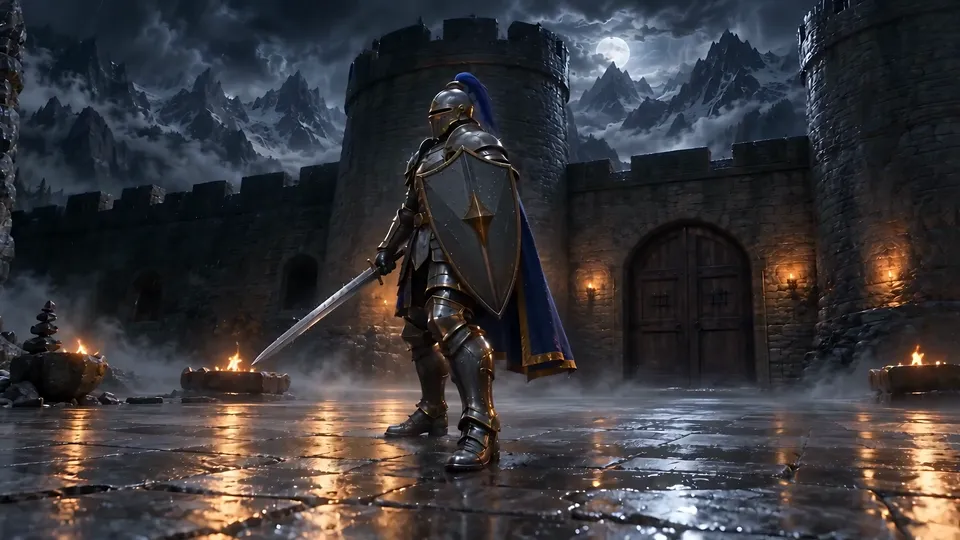
IResolve
The Iron Warden
The Unbroken Rampart
In this playtest
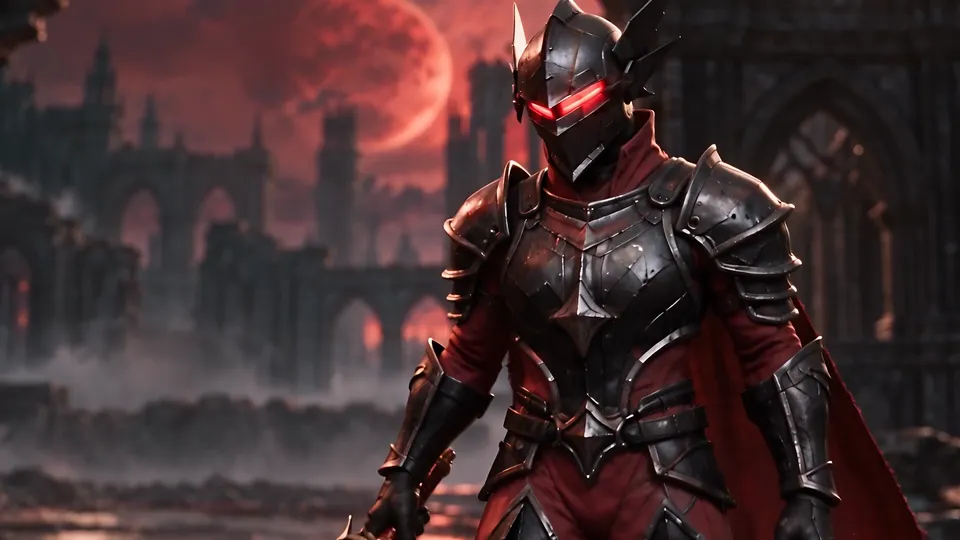
IIPressure
The Crimson Blade
The Unending Cut
In this playtest
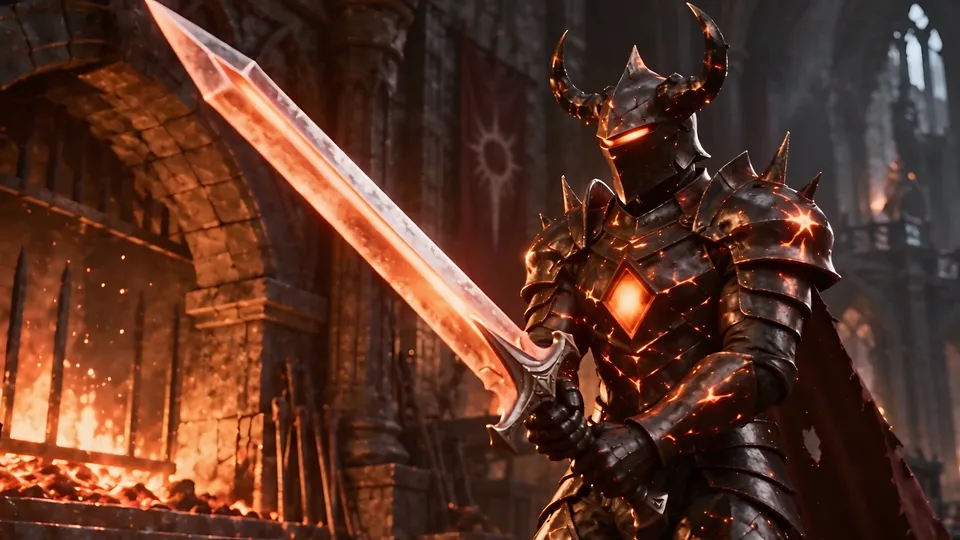
IIIRuin
Ember-Forged
The Sovereign of the Forge
Still being forged — not in this playtest
Four levels, one for the whole ladder
- Easy
- Learn them. Lighter blows and long breaths between their attacks.
- Medium
- A fair duel. Read them and you win about half the time.
- Hard
- Their signatures come a phase early. Little room for greed.
- Death
- They barely breathe. Every tell is the same — only reading all of them wins.
Solo Duel
In this playtest
Read your rival. Forge your answer.
Fight a rival knight the game controls, with VESPER at your side. The rival is scripted by the game and changes its own kit from a fixed set as it fights. Pick a challenge, pick a preset, and duel.
Three challenges
- Easy
- A forgiving rival. More time to react and find your rhythm.
- Medium
- A balanced duel. Read your rival and seize your openings.
- Hard
- A relentless rival. Faster reactions and sustained pressure.
Local Versus
In this playtest
Two bearers. One arena. One screen.
Two players on one computer. Each needs a device of their own: a keyboard and a controller, or two controllers. Two keyboards cannot be told apart. In the lobby, move your device to a side, pick a preset and ready up.
VESPER stays quiet here, but both players can still forge with their buttons. Both adrenaline bars are shown, and the game menu pauses the fight.
Play online
In this playtest
Meet another mind at the edge of a blade.
Duel a friend who is also a tester. In Play online, choose “1 vs 1”, then under “Add a friend”, type their signup email and press “Send invite”; they see your request in their Invites, get a short email, and choose Accept or Say no. Once they accept, you are friends: press Challenge next to their name, then Start, and you wait in the arena until they join. Your Friends list shows each friend as Waiting for you, Online or Offline; “Waiting for you” means that friend is already in the arena, waiting for you.May change in the next build
Each pair has its own private room: no matchmaking, no strangers. Saying no to a friend request means neither of you can invite the other again; I can undo it. Saying no to an invite to a duel just hides it; it shows again if you open Play online while they’re still waiting. Either of you can Remove a friend; you can invite them again later, but they can’t invite you. You can send 5 invites a day and have up to 20 friends, and each pair can play 20 matches a day.May change in the next build
The server referees every fight, VESPER is with each of you, the fight cannot be paused, and after a fight Rematch lets you fight the same friend again.
Tag team
In this playtest
You and a friend on one team. Tag in and out.
In Play online, choose “Tag team”: you and a friend share one side, and one knight from each side fights at a time while the other waits on the bench. Fight the bot together, or invite two more friends for 2 vs 2.
On the bench, press G to say you are ready; in the fight, press G to tag your ready partner in. On a controller, hold LT (PlayStation L2) and tap View (Select) for both. To talk, you both turn on Team radio in Settings first; then hold T to talk and let go to listen, or on a controller hold LT and click R3.May change in the next build
Training
In this playtest
Tutorial, skill lessons and a free sandbox.
The first time you play, the Tutorial starts by itself after the opening story: a short guided fight against a foe your sword cannot reach, where VESPER forges your first answer. You can skip it, and replay it from Training.
Training also holds seven Lessons, one skill at a time, ending in a final trial, and the Sandbox: fight freely against a partner you choose, and ask VESPER for anything. Nobody falls in the Sandbox.
In the Sandbox, VESPER’s deep forge answers up to 10 asks a day in each browser, within 20 minutes of your first Sandbox fight that day. After that she shapes answers from what she already knows, until the daily reset.May change in the next build
Competitive
Planned
A competitive ruleset for events is planned.
Something wrong, or missing?
This page follows the playtest build and changes with it. If a rule here does not match what you see in the game, tell me. hello@astrayagame.com